UX Approach to Enhance Eye Care Experience

Problem Statement

The COVID-19 pandemic presented significant challenges to our client's eye care business. Patients became hesitant to visit the diagnosis center, leading to a sharp decline in patient visits and impacting business. However, our research revealed that the issues extended beyond the pandemic, highlighting an opportunity to transform the eye care service through technology and a user-centered approach.

Understanding the Landscape

To develop effective solutions, we needed a deep understanding of the eye care ecosystem. This involved considering various stakeholders and factors:

  • People: Patients, their families, caregivers, administrative staff, doctors, nurses, and ambulance drivers.
  • Technology and Systems: Online registration platforms, patient reports, the mobile app, the website, and social media channels.
  • Facilities: Hospital campus navigation, parking availability, and building accessibility.

Data Analysis

We analyzed existing data to extract meaningful insights, moving beyond simply storing records to actively using them to improve the patient experience. Our analysis revealed key areas of concern:

  • Waiting Times: 40% of patients expressed dissatisfaction with long waiting times.
  • Hygiene: 24% of patients raised concerns about hygiene standards.
  • Feedback Collection: Patients preferred giving verbal suggestions rather than filling out feedback forms.

Putting a Face to the User

To truly understand the patients' perspectives, we developed detailed Patient Personas. These personas helped us empathize with their needs, motivations, and pain points throughout their eye care journey.
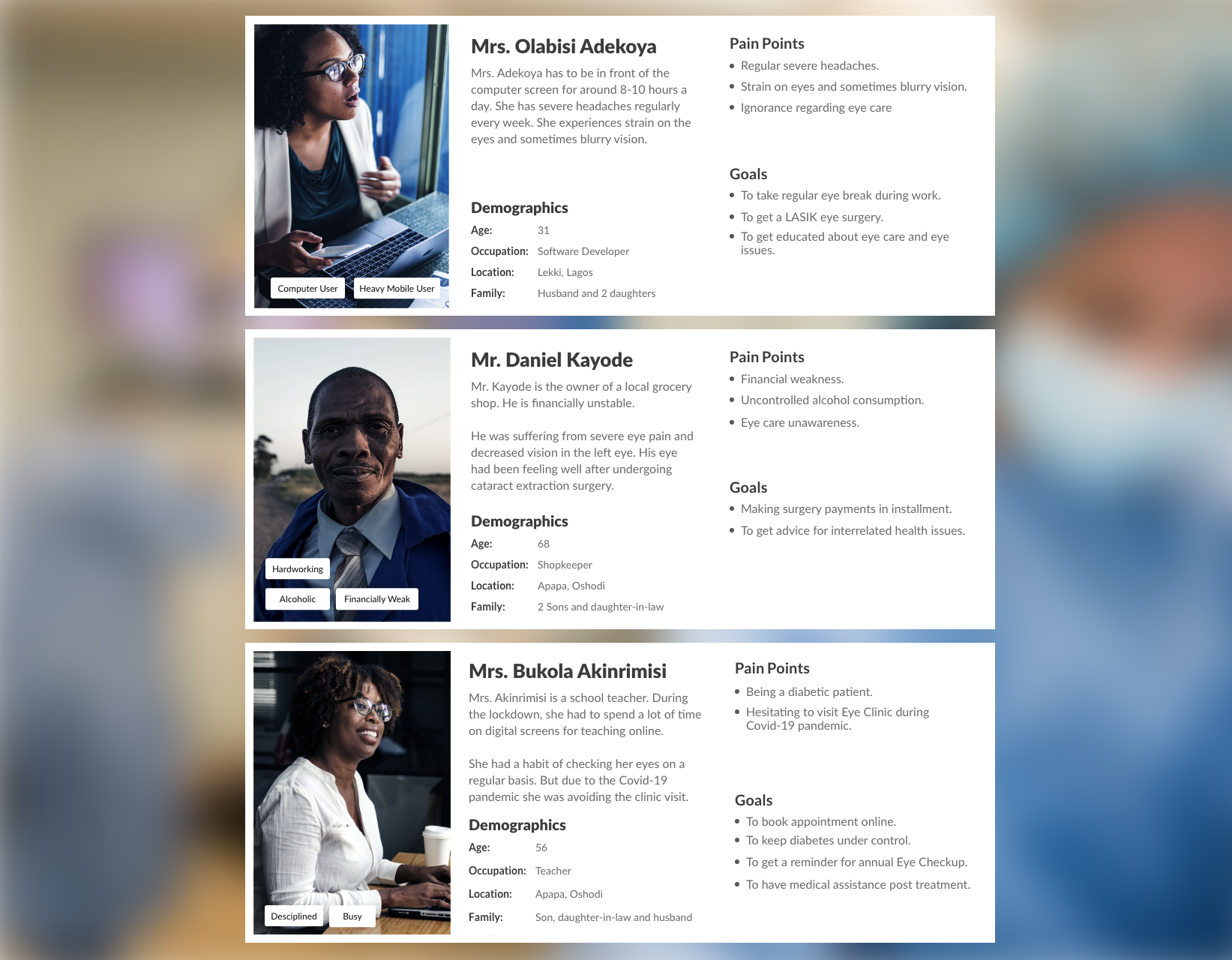
Eye Care: User Persona

Affinity Map

To synthesize the qualitative data gathered from user interviews and observations, we employed Affinity Mapping. This collaborative technique allowed us to organize user feedback, pain points, and needs into related groups, revealing key themes and patterns.

Eye Care: Affinity Map

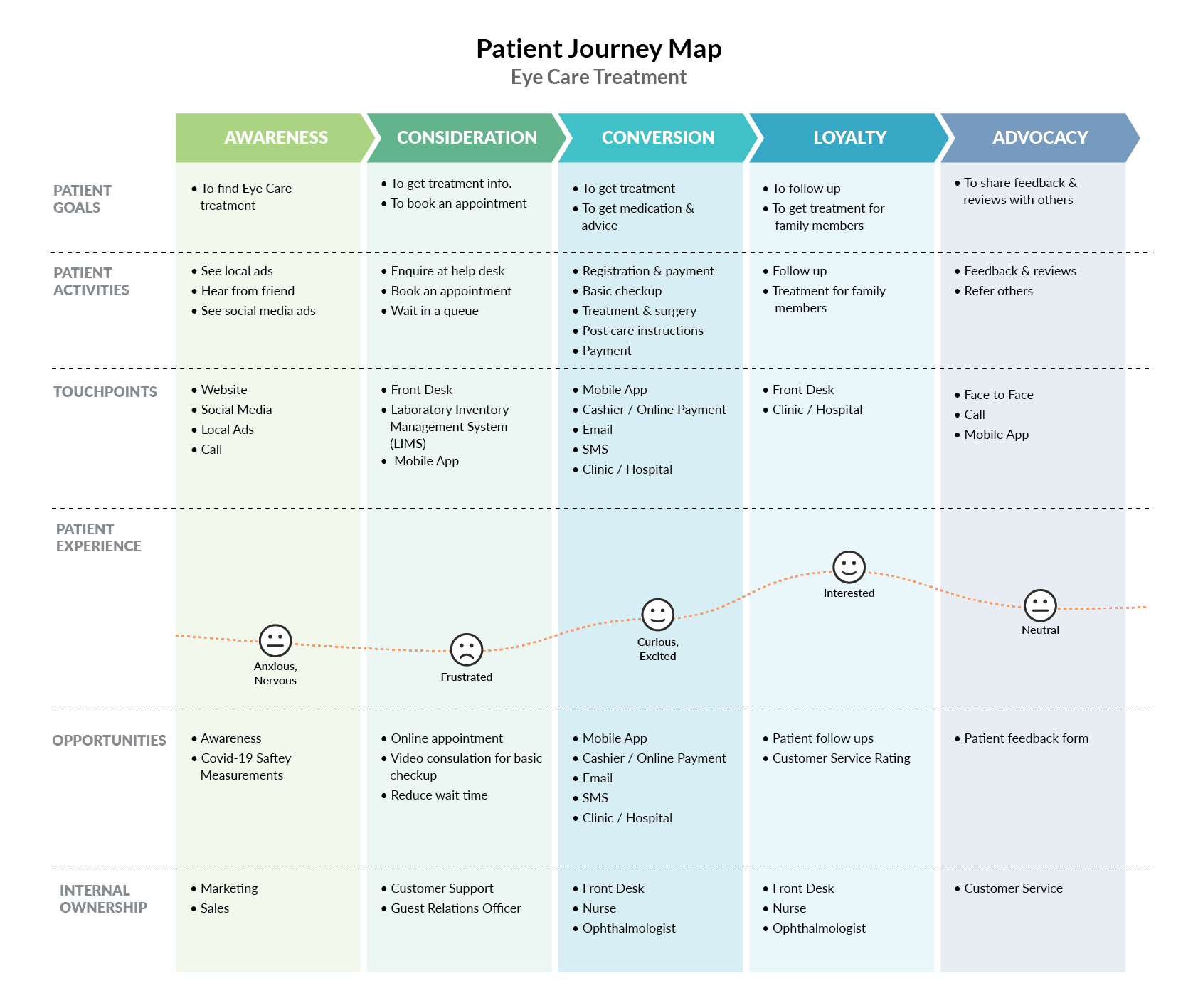
Mapping the Patient Journey

We created a comprehensive Patient Journey Map to visualize the patient experience across different stages:

  • Pre-Visit: This included finding the right service, making inquiries, scheduling appointments, and arriving at the facility.
  • During-Visit: This covered interactions at the help desk, waiting for registration, payment processes, medication reviews, consultations, treatments, and family members waiting for updates.
  • Post-Visit: This involved post-care instructions, the discharge process, feedback surveys, treatment payments, and follow-up care.
“Positive customer experience means a competitive advantage as it results in increased customer satisfaction, loyalty, advocacy, and greater customer lifetime value.”

Brainstorming

To generate innovative solutions, we used the SCAMPER method, a creative problem-solving technique. This framework prompted us to consider various angles:

  • Substitute: Could we replace parts of the service or process? For example, we explored replacing physical basic eye checkups with online interactive eye tests to reduce staff burden and avoid travel.
  • Combine: Could we integrate eye care with other services? We considered offering basic eye check-ups at a nominal or free cost alongside other healthcare services.
  • Adapt: Could we adapt processes from other industries? We explored implementing EMI payment options to make eye care more affordable.
  • Modify: Could we emphasize certain aspects? We proposed magnifying social media campaigns to raise awareness about eye care.
  • Put to Another Use: Could we find new ways to use the service? We suggested using video consultations for initial check-ups to save time and costs.
  • Eliminate: Could we remove unnecessary steps? We considered reducing or eliminating human involvement in basic eye checkups.
  • Rearrange: Could we change the order of the process? We proposed encouraging regular eye checkups instead of only visits for issues.

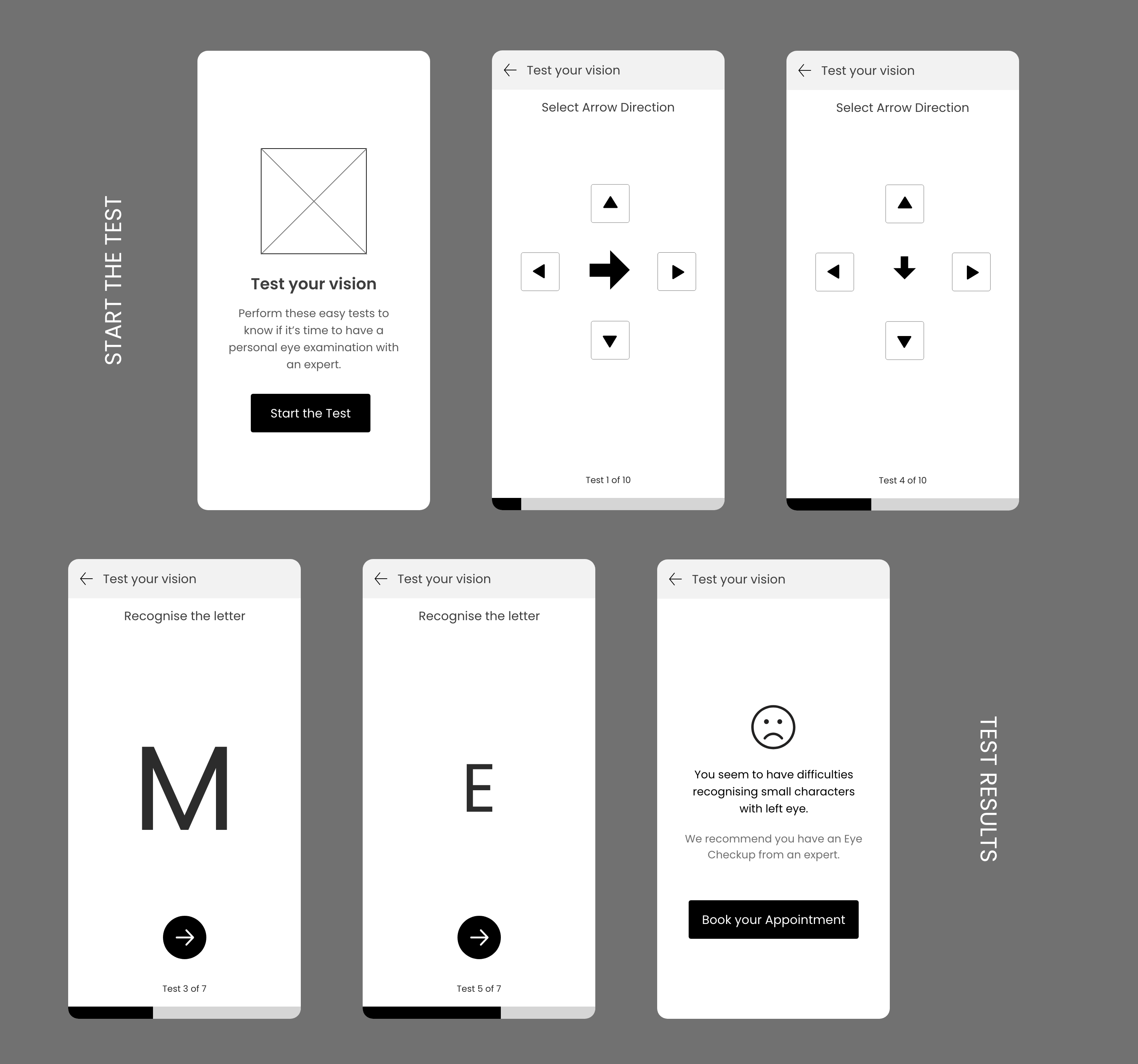
Wireframing

One of the challenges was designing an effective online vision test for home use. We focused on:

  • Clarity: Avoiding lengthy instructions and information overload.
  • Accessibility: Using large fonts for easy reading.
  • Simplicity: Using minimal on-screen elements to prevent distractions.
  • Context: Explaining numerical distances using familiar household objects.

Takeaway

  • Patient Journey Map: Creating a patient journey map proved invaluable. It enhanced the quality of care, improved patient retention and loyalty, and contributed to better health outcomes and overall well-being.
  • SCAMPER Method: The SCAMPER framework provided deep insights and encouraged us to think creatively, enabling us to develop innovative solutions.
  • Persona Development: Personas acted as a guiding beacon, helping us navigate challenges and stay focused throughout the project.
  • Project Scope: Managing a project that involved multiple stakeholders and diverse internal and external factors was a rewarding and enriching learning experience.

Team

Rameez Mukadam
Sr. UI/UX Designer
Vishakha Gorivale
UI/UX Designer
Rakhi Sonkar
UI/UX Designer
Neha Singh
UI Designer